Guide
Writing pages that answer what people actually search for
Most business articles exist because somebody said businesses should publish articles. They help nobody, they rank for nothing, and they quietly signal that the site is padding. The ones that work start somewhere else entirely — with a problem a real person is losing sleep over.
Written by Dave O’Mahony, who does this work himself ·
The mistake almost everybody makes first
You are told you need content, so you publish content. Five tips for choosing a plumber. Why regular maintenance matters. The importance of hiring a professional. Six hundred words, nobody reads it, nothing happens, and after three months you conclude that this whole thing does not work for a business like yours.
It did not work because none of it was written for a person. It was written for a publishing schedule. Nobody has ever sat down at eleven at night and typed “the importance of hiring a professional” into Google. People type what is actually worrying them, in their own words, usually as a question, and usually at the exact moment they are about to spend money they are not sure about.
The test is simple: would a stranger thank you for this page? Not “does it mention the right keywords”. Would they finish it better off than they started. If the answer is no, publishing it does not help you either — and increasingly it actively hurts, because a site full of pages nobody needed is exactly what search engines have spent the last two years learning to discount.
Start from the question, not the keyword
You already have the research and it did not cost anything. It is the questions customers ask you on the phone before they commit. The same five or six come up every week, you answer them from memory, and every one of them is a page.
What makes those questions valuable is that they are asked at the point of a decision. Somebody who wants to know whether a quote is reasonable is not browsing. They are about to either spend the money or not, and whoever answers that question well is in the room when they decide.
What that looked like for a client of ours
toothcheck.io is a client of ours, and these figures are published with their permission. It is a second-opinion service: patients upload a dental X-ray and a dentist who is not the one selling the treatment reviews it.
They could have published “the importance of dental health”. What the site actually publishes is this:
- Do I Really Need a Root Canal?
- Do I Really Need a Crown?
- Do I Really Need a Filling?
- 12 Red Flags of Unnecessary Dental Work
- How Much Does a Second Opinion Cost?
Those are live links. Open one and see whether it answers the question or holds the answer back — that is the whole argument of this page, and you should not have to take our word for it.
Read those again as a person rather than as a marketer. Every one of them is what somebody types after a dentist has told them they need eleven hundred euro of work and they have walked out to the car park not quite believing it. That is a real problem, at a real moment, described in the words the worried person would use — not the words the industry uses.
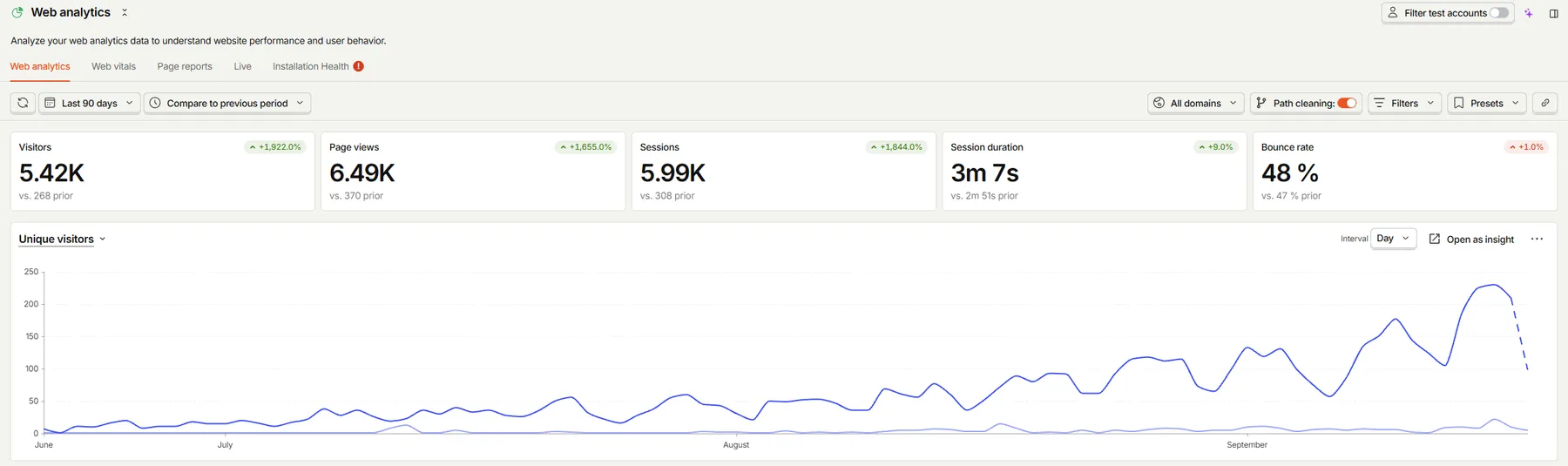
There is no trick in there. It is a handful of pages that answer the question somebody actually has, written properly, and then left alone to accumulate.
Answer it fully — including the part that costs you the call
The objection we hear most is that answering properly gives the game away. If you tell them how to know whether they need a crown, why would they pay you to tell them?
Because the person who reads it and concludes they are fine was never going to buy from you. You have lost nothing and they will remember where they got a straight answer. And the person who reads it and realises their situation is the complicated one now has a reason to trust you specifically, because you are the only one who did not hedge. A page that withholds the useful half to force a phone call is obvious to the reader, and it converts worse than the honest version.
The part almost nobody is measuring yet
Pages written like this get quoted by AI assistants, which is quietly becoming its own source of enquiries. Over three months Bing’s reporting shows ToothCheck cited 19,800 times by Microsoft Copilot and its partners, across an average of 22 different pages.
That is not a separate discipline to learn. An assistant answering “do I really need a root canal” reaches for a page that answers the question directly, states things plainly, and does not bury the answer under a preamble. The same things that make a page worth a reader’s time make it quotable.
What not to do
- Do not publish to a schedule. Four pages that answer real questions beat forty that fill a calendar, and the forty do measurable harm.
- Do not spin one page into twenty locations. The same article with the town name swapped is a doorway page, it is recognised as one, and it puts the rest of the site at risk.
- Do not publish generated filler. If nobody at your company would stand over a sentence, it should not be on your website. This applies whoever or whatever wrote it.
- Do not write for the industry. “Comprehensive restorative solutions” is not what anyone types. “Do I really need a crown” is.
And here is what did not work for us
It would be easy to show you only ToothCheck. The more useful thing is the one we got wrong, because we made exactly the mistake this page is warning you about.
On another of our sites we published in bulk — twenty-three pages, out together, on the reasoning that more pages meant more chances to be found. Months later, most of them had never been indexed at all. Not ranked badly. Not read by the wrong people. Never picked up by Google in the first place.
Part of that was a technical fault of our own, and we are not going to pretend otherwise: a key that tells search engines a new page exists was missing for the first eighteen days, so most of those pages were never announced to anybody. We fixed it and wrote it down so it cannot happen again.
But the technical fault only explains why they were not found. It does not explain why we thought twenty-three pages at once was a good idea, and that is the part worth passing on. Publishing in volume feels like progress because you can count it. Four pages published in a month is a number. Whether anyone was helped is not a number, so it quietly stops being the question.
The test at the end has to be: is this article genuinely useful to read? Not is it finished, not is it a thousand words, not is it the fourth one this month. If you cannot answer yes, publishing it makes your site worse rather than larger — and we know that because we did it to ourselves before we did it for anybody else.
The honest summary
This is the slowest of the three things that decide whether you get found, and it is the one most businesses abandon. It compounds over months rather than weeks, the first two pages feel like shouting into a room, and the payoff arrives long after the enthusiasm has gone.
But it is also the only one nobody can take from you. Reviews can be matched and profiles can be tidied by any competitor in an afternoon. A page that genuinely answers the question your customers are frightened about is harder to copy, and it keeps working for years.
If you would rather it was just done, that is part of what we do — see local search and reviews for the profile side, and the profile guide for the part that usually comes first.
Not sure which questions are worth answering?
Tell us what your customers ask you on the phone before they commit. That list is usually the whole content plan, and we will tell you which of them are worth a page.